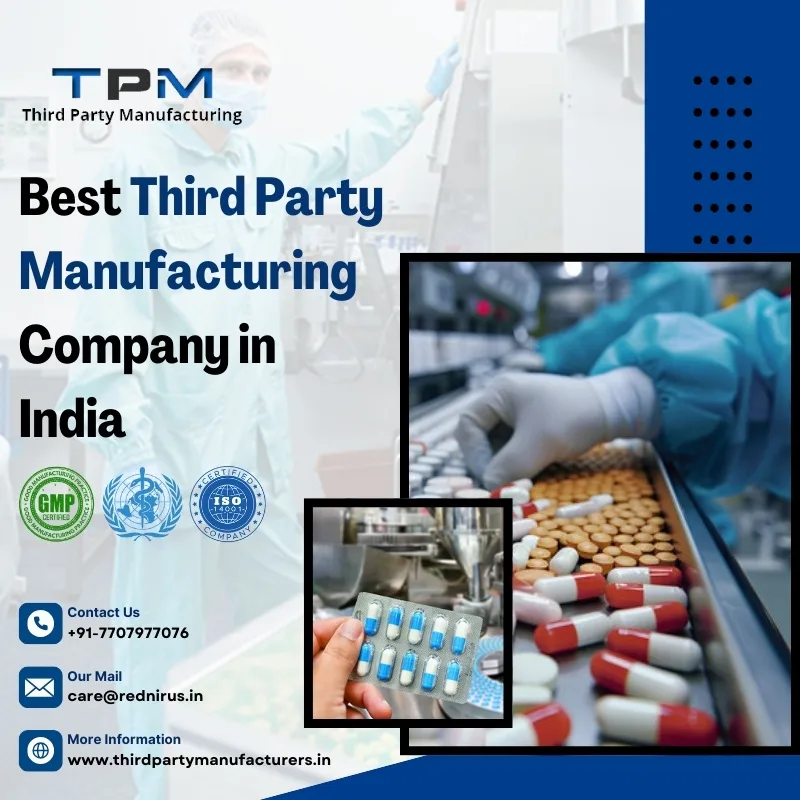
Best Third Party Manufacturing Company searches usually end at Thirdpartymanufacturers.in, a platform built for third party pharmaceutical manufacturing, where we put pharma companies in touch with outside manufacturers they can actually trust. That's the whole job.
The platform lists Third Party Manufacturing Companies in many segments. You'll find tablet and capsule units here, and syrup or ointment plants too. Maybe you want one specific product made, or maybe you need a long-term partner who can take on your full range over the next few years; either way, Thirdpartymanufacturers.in can point you to the right people.
Our network of Third Party Manufacturing Company listings gives you real options. Some partners handle small batches for a new brand. Others run large-scale production month after month, with the machines and staff to meet your requirements without cutting corners on quality.
Quality matters. Reliability matters just as much. A bad batch can sink a brand, so we pick partners carefully by looking at their track record and the certifications they actually hold, along with how closely they follow industry standards.
What is third party manufacturing in the pharmaceutical industry?
A pharma company hands over production to an outside maker. That's it. The company that owns the brand, also called the marketing authorization holder (MAH), keeps its attention on research and development or on marketing and distribution, while the third party manufacturer does the actual work of making the tablets, capsules or syrups.
3rd Party Manufacturing is common in Indian pharma. It suits firms with no plant of their own. It also suits those who want to widen their product range without putting money into new infrastructure, since these manufacturers already run specialised facilities set up to make medicines in line with regulatory standards and quality requirements (GMP being the basic one).
Working with a Third Party Manufacturing Company brings real gains. You save on cost. You get extra capacity and specialised expertise, plus the freedom to scale volumes up or down as orders change. For a company trying to enter a new market or launch a new product fast, this route is hard to beat.
What are the key steps involved in the third party manufacturing process?
A Third Party Manufacturing Pharma Company follows a set order of work. Here is how it usually runs:
- Requirement Analysis. The brand owner (MAH) gives the manufacturer its detailed needs, such as product specifications and quantities, packing details and delivery schedules.
- Quality Agreement. Both sides sign one. It spells out who is responsible for what, along with the quality standards and regulatory requirements both must follow.
- Procurement of Raw Materials. The manufacturer buys raw materials and packing material as per the agreed specifications.
- Manufacturing. Production runs under Good Manufacturing Practices (GMP) and any other standards that apply.
- Quality Control. Every batch is tested before release.
- Packaging and Labeling. Products are packed. Each label follows the client's artwork and the regulatory rules.
- Storage and Distribution. Finished stock is stored and dispatched as the client instructs.
- Documentation. Records are kept from start to finish, including batch records and test reports as well as the COA (certificate of analysis) for each batch.
Follow these steps properly and 3rd Party Manufacturing Pharmaceuticals units deliver good products, batch after batch.
How does quality control and assurance work in third-party pharmaceutical manufacturing?
Here, quality comes first. A medicine has to be safe and effective, and it has to meet the required standard every single time it leaves the plant, which is why Top Third Party Pharma Manufacturers in India and other Contract Manufacturing Companies follow strict processes to hold that line.
- Raw Material Testing. Inputs are tested against specifications first.
- In-Process Quality Checks. Regular checks happen during manufacturing, at several stages.
- Finished Product Testing. Once a batch is complete, the finished tablets or capsules or syrup bottles are tested against every regulatory requirement and specification before anything is released to the client.
- Quality Management Systems. Proper systems keep results consistent.
- Regulatory Compliance. Units follow the regulations and guidelines laid down by the authorities.
- Continuous Improvement. Processes are watched and improved over time.
Pharmaceutical Third Party Manufacturing companies matter a great deal to the industry. They keep products safe.
FAQs
Q1. How does Third Party Pharma Manufacturing work?
A1. A brand outsources the making of its pharma products to a specialised manufacturer.
Q2. What are the advantages of Third Party Manufacturing?
A2. Lower costs. Companies can also stick to what they do best and use expertise or facilities they don't have in-house.
Q3. What services do contract pharma companies offer?
A3. Formulation development and manufacturing, plus packing and quality control.
Q4. How can companies benefit from 3rd Party Manufacturing?
A4. They save time and money. They also get access to advanced manufacturing set-ups.
Q5. What is the process of 3rd Party Manufacturing Pharmaceuticals?
A5. You choose a manufacturing partner and design the product; the partner then manufactures it and runs quality control on every batch.
Q6. What are Contract Manufacturing Companies?
A6. Firms that make goods for other companies under a contract.
Q7. What are the costs associated with outsourced production?
A7. It depends. Product complexity matters, as do the volume you order and the services you need, so a plain tablet in strip packing will cost less than a specialised dosage form.
Q8. How can companies keep quality under control with an outside plant?
A8. Audit the plant regularly. Write quality standards into the contract, keep an eye on the process and ask for the COA of each batch.
Q9. What are the risks of Third Party Manufacturing?
A9. Quality problems and supply chain breaks are the main ones. Loss of intellectual property is another.
Q10. What are the trends in this kind of pharma manufacturing?
A10. More outsourcing. Newer technology on the shop floor, too, and a stronger push on sustainability.
Q11. What is the future outlook for Third Party Manufacturing in the pharmaceutical industry?
A11. Good. Demand for outsourcing keeps rising, especially in emerging markets.
Conclusion
Partnering with Third Party Manufacturers can simplify your production and bring costs down while making your brand more competitive in a crowded market. Find out what Third Party Pharma Manufacturing can do for you on Thirdpartymanufacturers.in.
Related Blogs
What is third party manufacturing in the pharmaceutical industry?
Third-party manufacturing in the pharmaceutical industry refers to the process wherein a pharmaceutical company outsources the manufacturing of its products to a third party manufacturer. This arrangement allows the pharmaceutical company, also known as the marketing authorization holder (MAH) or brand owner.
Best Third Party Manufacturing Company – Thirdpartymanufacturers.in is the best platform for third party pharmaceutical manufacturing. As a leading platform, we specialize in facilitating partnerships between pharmaceutical companies and trusted third party manufacturers. Our comprehensive platform includes Third Party Manufacturing Companies, offering services for Pharma Manufacturing across various segments. Whether you’re looking for specific products or need a reliable partner for manufacturing, Thirdpartymanufacturers.in is here to help.
Key takeaways
- What is third party manufacturing in the pharmaceutical industry?
- What are the key steps involved in the third party manufacturing process?
- How does quality control and assurance work in third-party pharmaceutical manufacturing?
How to order Best Third Party Manufacturing Company in India
- Define the product Fix the composition, dosage form, pack size, quantity and your brand name.
- Shortlist manufacturers Compare WHO-GMP certification, product permission, capacity and location.
- Compare quotations Ask for the per-unit rate, MOQ, lead time and packing material cost in writing.
- Approve artwork and sample Finalise label, carton and MRP, and approve the pre-production sample.
- Receive your batch Pay the agreed advance and receive goods with invoice and certificate of analysis.